The need of a revision had long been felt, and in the early
part of 1930 six brothers who had, it was understood, the
confidence of their brethren, undertook the work.
- Many others in various parts helped materially. The revision, which was commenced in July, 1930, was completed at Teignmouth, England, in September, 1931.
- The Lord's gracious help was gratefully realised throughout the
service. The prayerful sympathy in the work manifested in the saints
generally, was very sweet and comforting, and assuredly was pleasing to the Lord.
The general rule followed was to alter as little as possible in old
hymns retained, but to expunge everything considered inconsistent with the truth.
- The incongruity of singing to God what would be refused in a Bible reading as unscriptural was kept in mind.
- In this connection the revisers note – and felt for themselves – how unreliable is a merely casual judgment as compared with one that is the product of specific and intelligent exercise.
- Thus we have unquestionably sung, "O Christ, what burdens bowed Thy head" – hymn No. 400 – whereas, scripture shows that the Lord's head was not bowed by external pressure, as the line quote conveys, but was an act of His own, evidently in holy submission to the will of God.
Another important object in view in the revision was to arrange lines or verses in hymns intended for the assembly in accord with the truth governing procedure in the worship of God, that oscillation – a verse addressed to the Father, then one to the Lord, and again, a verse to the Father, etc. – should be prevented.
- The truth which should guide us as together in the assembly is that as Christ is apprehended through the breaking of bread and owned among us as Head, He leads to the Father,
- and thus our hymns and other expressions of worship, during the succeeding period of the meeting, would be addressed to the Father.
- Some hymns possessing this irregularity, but deemed worthy to be retained, did not lend themselves to the desired adjustment and so remain unaltered.
The use in hymns of titles of Christ, such as 'Saviour', 'Shepherd', 'Lamb', came under consideration, as to whether they should stand if their significance did not characterise the respective hymns in which they appear.
- It was decided that they should remain, as scripturally recognised designations of the Lord. 'Jehovah' also remains, and 'Hallelujah', as an expression of praise.
About 120 hymns in the old book do not appear in the new. The elimination of a good many of these caused much heartsearching, as they were time-honoured and had passed the scrutiny of Mr. Darby;
- besides, their piety is perhaps generally deeper than many of the more modern compositions; but careful inquiry showed that they were
hardly, if ever, used in the service of God.
- The truth is that God has graciously, during the last thirty years, furnished further light as to the assembly, particularly as to the procedure suitable to it as the vessel of service Godward and testimony manward,
- and this has clarified the bearing of the ministry so bountifully supplied during the last century.
- Saints generally have profited by the light and help afforded, and so
have found that those hymns fail to intelligently express their feelings
and affections, for we must sing, not only with the spirit, but with the
understanding also.
- Besides, careful examination revealed much incongruity spiritually, and matter lacking of scriptural support.
- It may be added that hymn 350 [by Mr. James Boyd], although much used, is among those excluded. This hymn has certain defects, which could be removed, but as the author is living no change could rightly be made without his permission; on account of certain definite reasons involving fellowship, it was felt this should not be sought.
About 85 new hymns are included in the new book, so that it will be smaller than the old one.
- It is confidently assumed, however, that this is somewhat of an advantage; the old book contained many hymns which had fallen into disuse, and most of these have been replaced by hymns which will, it is believed, be generally usable.
- A good few of the 'new' hymns are new only in the sense that they did
not hitherto appear in the Little Flock Hymn Book. One or two gospel hymns were in the 1881 edition.
- Among the added hymns for assembly use are some of Mr. Darby's, also some bearing other well-known names; and in the gospel section many hymns long in use will be noted.
- Thus the number of strictly new hymns added is not large; but after scrutiny, they form the only selection considered suitable for inclusion in a book already the richest extant hymnal.
The revisers were very appreciative of the interest and energy in many of their brothers and sisters, evidenced in the very large number of hymns
sent to them, and all may be assured that their productions were examined without partiality.
- Reluctantly were many hymns rejected which taken severally contained real merit, but set alongside of those already in use or accepted, they contained nothing distinctive; they had no new feature, often containing the spirit, words, and even lines of well-known hymns.
- Sometimes an honoured name of a brother tended to the acceptance of his production, but the final decision was governed by the understood rule that such hymns only as fitted in with the requirements of the revision should be accepted.
- The book was already rich, and so additions needed quality in a spiritual sense, and this involves added features – such as are suggested in the touches of Christ which the Spirit has given during the past thirty or forty years.
- During many weeks – indeed, months – prior to the final revision several capable brethren carefully examined the new hymns and suggestions as to old ones furnished, and their findings were considered as before the Lord by those responsible for the revision, and thus the final selection was made.
- It can, therefore, be perceived that all available means were used to make the new book as acceptable as possible.
Needed alterations in many of the old hymns retained required much earnest thought, and in some instances poetic ability.
- A hymn – e.g. No. 210 – would be valued for its general spirit and bearing, but almost its whole structure had to be changed in order to make it conform with the truth and order that should govern it.
- Helpful suggestions from brethren in different parts of the world greatly facilitated this part of the work, and heartfelt thanks are due to those who sent them.
The most important of the alterations are in hymns 150, 181 and 401 [of the revision of 1903].
- They are occasioned mainly by clearer light which the Lord has shed on the great subject of His own Sonship.
- For a long time some have felt that the expression 'Eternal Sonship' lacks scriptural warrant, and that however guarded the mind may be, the use of the expression leaves an impression that the Lord in Deity occupied a place of relative inferiority.
- The false statement of the 'Creed' that He was begotten of His Father before the worlds would not be admitted, yet a vague impression corresponding with this possesses many.
- But it is inconsistent with the position and form of God in which our Lord was absolutely before His incarnation, and it is surely important that nothing should weaken this in the minds of the saints.
- "Thou art My Son; this day have I begotten Thee", Psalm 2: 7, shows that our Lord was begotten in time, not 'before the worlds'. He was not begotten twice. "I" in the passage is emphatic.
- The place given to this scripture in Hebrews shows that sonship in the fullest sense is in view.
- Hebrews 7: 3 has by some been taken to mean that parentage did not attach to the Son of God, implying that this was a title belonging to Him as in the form of God, Melchisedec, as not having any parentage, with other characteristics, being "assimilated" to Him; but this is building on the title instead of the Person.
- The passage goes on to say, "Consider how great this personage was", and this thought runs through the chapter.
- That Christ as to His Person has neither father nor mother is of course true; He is without beginning of days or end of life.
- A statement cognate to this is chapter 13: 8, "Jesus Christ, the
same yesterday and today, and for ever"; here the title is "Jesus Christ" instead of "Son of God",
- showing that while titles applying to Him as Man may be used to designate Him in His eternal relations in Deity, we cannot make them applicable to Him viewed only as in those relations.
- Hebrews 1: 12, as quoted from Psalm 102, has to be borne in mind, as we consider the words "the same" in chapter 13: 8.
- They refer to the Person of Christ as unchangeable. "Yesterday", no doubt stresses the immediate past, but cannot be limited to this.
But the very title "Son of God" involves that God is Christ's Father, and scripture, it is needless to say, abounds with confirmation of this.
- Hebrews in treating of the subject of the priesthood of Christ and Melchisedec introduces the statement from Psalm 2 – quoted above – God saying to Him, "I this day have begotten Thee". Galatians 4: 4 is important in this connection.
- Obviously Hebrews 7: 3 alludes to the parentage and genealogy required in the Levitical priesthood as seen in Ezra and Nehemiah.
- Melchisedec had none, and yet he was priest of the Most High God; that is, his priesthood depended on himself; not on his descent, and this shows that the greatness of Christ personally as in manhood is in view.
For similar reasons the expression 'Eternal Word' has been deemed incorrect.
- While "the Word" is employed in John 1 to designate the Lord before His incarnation, this does not mean that this appellation applied to Him in the form of God.
- It refers to Him as speaking the mind of God here, involving also that He is the Logos, that is, all that was and could be spoke by God.
- It was as in manhood He spoke, the voice from heaven being, "This is my beloved Son; hear Him".
- The thought conveyed in 'the Word' is seen here in the Son; but it is to be noted that whilst the titles 'Son', 'Jesus', 'Christ', 'Immanuel' are given to Him formally by God, 'the Word' is not.
- 'Logos' is employed over 300 times in the New Testament, and this fact, combined with the manner of application of this title to Christ by Luke and John, indicates that it was used by His own as conveying what He had become to them as the expression of the mind of God.
- On the other hand, its common usage by the saints in the early days of the church's history, indicating what they apprehended, may explain why the Spirit employed it in John 1 rather than other titles,
- as tending to preclude the application of divinely given mediatorial titles such as Son, to our Lord as in the form of God. It is as man He is Mediator. 1 Timothy 5: 2.
In Revelation 19 His name is said to be "called the Word of God", yet He has a name which no one knows but Himself.
- Thus these expressions are superseded in the hymns mentioned, and in
certain others, by terms representing the truth.
- Some have thought that the framing of the worlds by the word of God – Heb. 11: 3 – alludes to Christ acting before incarnation as the Logos.
- "Word" here, however, is not Logos, but Rhema. It is God's utterance or fiat, and does not point to a particular divine Person.
In considering these great matters – requiring holy contemplation and worship rather than discussion – John 17 yielded much, especially as to the lines in hymn 181:
"Veiled Thy glory, yet twas witnessed
By Thine own while here below".
- The writer of the hymn clearly had the glory of Deity in mind, and
John 17: 5 shows that this was left rather than veiled – not, of course, that the Lord's person was changed, for He is "the same yesterday, and today, and for ever",
- but being in the form of God, He emptied Himself and took a bondman's form – Phil. 2 – which is not Deity. He was in man's place, His Person, as said, remaining unchanged; no one knows the Son but the Father.
- As man He fulfilled His mediatorial service on earth, and of this He
speaks to His Father, as we see in John 17: 1, indeed the first four verses of that chapter are marked by this feature,
- but verse 5 clearly touches on what is outside the mediatorial sphere – a glory which the divine Persons shared together
before the world was.
- The form of the address, the emphasis on the pronouns, and familiarity indicate plainly that we are in the presence of one divine Person speaking to Another, we may say, on equal terms, and that a glory proper to Themselves and between Themselves is contemplated.
- The Lord asks to be glorified with this glory "along with" the Father. It is not a glory He had 'won', or which was given – verses 22, 24 – to Him as Man, but one which He had shared before the world was.
- Had He brought it with Him, veiled in the condition of humiliation He took on earth, He could hardly ask to be reinvested with it.
- While the Lord a become man, left, as to outward form and position, the glory of Deity, His person as already said, remains unchanged.
- As here below He could say, "Before Abraham was, I am", John 8: 58, which shows that personally He is inseparable from Deity. This is inscrutable.
Hymn 150, verse 3, line 2, as originally written, had, "Whose essence is concealed".
Fulness is not exactly the Godhead, although expressing it, and refers to revelation as the sphere of it.
- The fulness of a person or thing is not the thing itself. The same is true of 'glory'.
- Then Godhead – I refer to the compound nature of the English word
– Godhead implying relation with creation – while generally a
synonym of Deity, is evidently relative, but Deity is properly used to
convey The Absolute.
The changes made in hymn 233 will be specially noticed, but no doubt generally approved. "In Thy presence break the bread" – verse 3 – is incongruous.
- The breaking of bread is for a remembrance of Christ, and this obviously contemplates His absence, not His presence.
- He is present spiritually as He is recalled in His appointed way; but this is after the bread is broken, not before.
- From this hymn, and also No. 61, the word 'wine' has been deleted,
as scripture does not say it was the ingredient used in the Lord's supper either in its institution or afterwards.
- "The cup" is the scriptural expression.
- While there can be no doubt that wine was the ingredient the omission of its mention as in the supper is significant.
- It suggests earthly joy – that characterising Christ's relation
with Israel; whereas "the cup", out of which all drank – Mark 14: 23 – points to the unity of the assembly.
- Then, the cup is called in scripture "the cup of blessing"; this conveys a most precious spiritual thought – that the love of God, witnessed in the blood of Christ, enters into the cup of the Lord's supper.
Hymn 393 has long occasioned difficulty because of 'Immanuel's land' being used for heaven.
- The reference to these words is to Isaiah 8: 8, and an examination of this verse and its context will show that the literal land of Israel is in view; the Assyrian would invade the land of Immanuel.
- Canaan, as seen in Joshua and elsewhere, is a type of heaven – that is, heaven as known now to faith by the Spirit – but Isaiah, in the passage mentioned, is not viewing the 'land' in this way.
- Therefore "the heavenly land" now replace 'Immanuel's land' in this hymn.
A tune book is in course of preparation containing tunes for all hymns in the new book, and will contain an appendix which includes some of the omitted hymns thought suitable for household use. The saints will be notified when it is ready for circulation.
In view of the abundant light, instruction and grace God has so
graciously ministered to His people during the last one hundred years,
it has to be owned that – excepting those by JND and a few others –
- the hymns composed in response are not in quality such as might
have been reasonably expected; the paucity of hymns suitable for the
worship of the Father in the assembly is especially to be noted.
- The exercise entering into the present revision may lead to more depth of spiritual feeling, intelligence and ability for poetic compositions, so
that what is desired may yet be forthcoming. May God grant it!
But notwithstanding the above admission, it were ungrateful to our Chief Musician, and to those whom He has employed to supply our present volume of hymns – especially those of a 'more excellent' quality – and to those who from time to time have revised and compiled them, not to state, in closing, that
- it is confidently believed that the new Little Flock Hymn Book will be found richer spiritually, more suitable generally for the service of God,
- and affording more facility for the outgoing in the assembly of the intelligent praise and worship of the saints to the Father and the Son than any known hymnal hitherto available.
Finally, the importance of saints becoming conversant with the contents of the hymn book may be urged.
- This will result in individual comfort and edification, and it will assure more variety and freshness in the use of hymns in the assembly.
- It has been noticed by those who move about among the gatherings that comparatively very few hymns are in current usage.
- This makes for flatness and staleness in the meetings, whereas if the hymn book were well known, a much more extensive variety would be introduced so as to be sung by the saints as gathered together.
Those whose privilege it was to have part in this revision felt they should own to the Lord while together that no one capable of undertaking it alone had come forward, although, as already said, the need of it was long felt.
- It is believed that the Lord took account of this acknowledged weakness, and graciously extended the needed help to those who had undertaken the service. To Him be all the praise!
[unsigned]
Page Top
| THE HYMN BOOK REVISION – 1951 |
|---|
 Mr. A. E. Myles agreed to take on the responsibility for the work in answer to the wishes of the brethren.In May, 1951, when the task was finished, save for various details, Mr. Myles was taken very seriously ill with a stroke and was unable to contribute further to the work.The responsibility for carrying the service through to completion, as well as attending to other matters connected with the revision, was therefore taken over by others. The following account was written by Mr. G. H. Stuart Price.
|
Although the possibility of another revision of the Hymn Book had been in the minds of some brethren since the establishment of the ministry as to the Person of the Holy Spirit, and of the liberty which the brethren were enjoying in speaking to Him,
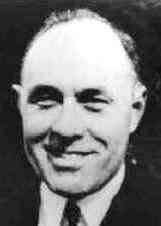
- it did not take any very concrete form until the close of a meeting in London with Mr. James Taylor in July, 1950. [J.T. 70: 312]
- The reference then to the "hymn" in Matthew 26: 30 gave the opportunity for enquiry to be made as to the comeliness of introducing hymns to the Spirit.
- The lack of any such in the existing hymn book was evident, and it was remarked that if the service of God required them the Lord would undoubtedly help the brethren to add them.
- It was also indicated that many of the brethren felt the time had come to seek help from the Lord to fill out the service of God by singing to the Spirit.
About three weeks later, a goodly number of brothers, drawn from all parts of the British Isles and including as many as were available from overseas, came together at Teddington to confer on the matter.
- It was evident that the brethren were of one mind as to the desirability of revising the Hymn Book,
- and Mr. A. E. Myles agreed to take on the responsibility for the work in answer to the wishes of the brethren.
- Provision was made at that time for new hymns of any kind to be considered and certain suggestions were made as to the type felt to be needed, in addition to those addressed to the Spirit.
The work proceeded forthwith, and it soon became evident, from the extensive correspondence received as to the existing hymns, that
- there was sufficient exercise among the brethren to justify a complete revision of the book.
- It was, therefore, decided that all subsequent work should proceed with this in view.
For the next few months the work continued daily, various brethren frequently being invited to help.
- On two or three occasions larger gatherings were held so that the brethren could be informed about the progress of the work,
- and express their judgment as to some of the many new hymns submitted.
The preliminary work was completed by the end of January, 1951, and in that month Mr. Myles went to America with the intention of going through the provisionally-selected hymns – new and old – with Mr. Taylor.
- The discussion on the hymns took place in a series of meetings in New York, extending over several months, at which one or two other brothers were usually present.
- In May, 1951, when the task was finished, save for various details, Mr. Myles was taken very seriously ill with a stroke and was unable to contribute further to the work.
- The responsibility for carrying the service through to completion, as well as attending to other matters connected with the revision, was therefore taken over by others.
One of the outstanding features of the revision has been the direction in which the help of God has been particularly manifest.
- While the exercise as to the revision largely arose through the desire to have hymns addressed to the Holy Spirit – and many choice hymns of this type have been received – they have been fewer in number
than those addressed to the other divine Persons.
- This has been taken to indicate the mind of the Spirit that, even in the matter of the Hymn Book, He would not have us make too much of Himself, as He is here in relation to the Father and the Son.
- The fact that manifest help has been given in hymns composed to the Father and to God is rather striking in view of the comments at the time of the 1932 revision. It was said then:
"In view of the abundant light, instruction and grace God has so graciously ministered to His people during the last one hundred years,
"it has to be owned that – excepting those by JND and a few others – the hymns composed in response are not in quality such as might have been reasonably expected;
"the paucity of hymns suitable for the worship of the Father in the assembly is especially to be noted.
"The exercise entering into the present revision may lead to more depth of spiritual feeling, intelligence and ability for poetic compositions, so that what is desired may yet be forthcoming. May God grant it!"
In connection with the number of hymns addressed to each of the divine Persons it has been borne in mind that Scripture presents the Father as supreme in the Economy,
- and both the Son and the Spirit as serving relative to that supremacy, the Son having the second place and the Spirit the third place.
- It was felt that this order should be reflected, in some way, in the number of worshipful hymns addressed to each.
- The book would be considered out of balance if, for example, it contained more worshipful hymns to the Lord Jesus than to the Father.
- It has also been thought that the recognition of the relative places of the Persons of the Godhead in the Economy is essential
- before the worship of God Himself – embracing all three Persons made known under the one Name, according to Matthew 28 – can be taken up intelligently,
- and that real power in the souls of the saints is needed if God Himself is to be the Object of worship in the assembly.
- There are, however, a number of new hymns provided addressed to God having the three Persons in mind.
- A few of these contain a verse to each of the Persons severally and then the last verse gathers up the great truth that God is One, thus giving us the fullest sense in which we can have the Deity before our minds.
Since it was a matter of considerable exercise in the 1932 revision to exclude hymns having a verse addressed to the Father, then one to the Lord, and again a verse to the Father – this being spoken of as 'oscillation' –
- it is understandable that questions have been raised as to whether the inclusion of hymns of the type just referred to represents any departure from our understanding of the truth governing procedure in the service of God.
- It has been in mind, however, that there should be no regression on this matter, the two apparently conflicting thoughts being reconciled by an understanding of the oneness of Deity.
- The essential equality of the Persons of the Godhead is always maintained and only adds lustre and glory to the relative positions in which each may be viewed separately.
It is never contemplated that we, in any sense, go beyond the economy in our relations with divine Persons, but it is felt
- that the blessed Spirit is helping us now into a greater understanding of the worship of God Himself,
- the title being used in the fullest sense, that is as including the Father, the Son, and the Spirit.
- In the light of this and according to the help and liberty which the Spirit may afford at the time, it is thought to be in order to address an expression of worship to each Person at the highest point in the service of God.
- If, as recognizing the supremacy of the Father and then the glorious
greatness of God Himself, we are to be helped to devote an increasing amount of time to that part of the service, then the additional hymns of this character should be particularly valuable.
- May we not humbly feel that they have been brought into the book under the influence of the Spirit in view of the saints being led by Him into a fuller knowledge of the blessedness of God Himself?
The recognition of the oneness of the Godhead brought under critical review certain expressions which may attribute something to one divine Person to the exclusion of the others.
- This largely centred in the use of the word 'alone' which occurs with surprising frequency in the old book.
- In the light of the oneness of the Godhead, it is hardly right to sing:
"O wondrous Saviour! Jesus, Lord,
Worthy alone to be adored!" [Hymn 170]
or "Thou, the Lamb, alone art worthy".
- In these two cases, as in many others, it has only been necessary to
make a slight alteration in the wording to guard this point of doctrine.
For a similar reason, we might hesitate now to say:
On the other hand, there are several instances where it is perfectly correct to attach the word 'alone' to the work of one of the Persons of the Godhead. For example:
The word 'alone' may clearly also be applied when the greatness of God
Himself is before the soul as, for example:
- "To God – alone,
Dwelling in uncreated light".
It is felt that the careful checking of this point throughout the book will not only help the brethren into a greater appreciation of the oneness of the Godhead,
- but it will serve to bring out the distinctive glory connected with the manhood of Christ.
The question of the relative positions which divine Persons have taken in the Economy has been very particularly borne in mind in examining hymns addressed either entirely or in part to the Holy Spirit.
- It came out distinctly in the discussion which took place on the
occasion of the Teddington meeting, that while Deity is as full in the Holy Spirit as in the other Persons of the Godhead,
- yet He has been pleased to take certain positions to augment the service to both the Father and the Son, and this should be in our minds when
addressing Him.
This led to much helpful enquiry as to the most suitable title by which the Spirit might be addressed in hymns, particularly those intended for use in the service of God.
- For example, where the Spirit is helping us in relation to our approach to the Father, such titles as 'Spirit of Adoption' or 'Spirit of the Father' seem particularly appropriate.
- If the Spirit is viewed separately, in His own distinctive glory, the titles 'the Spirit' or 'the Holy Spirit' are suitable, but in that way He is viewed as taking the third place in the Economy.
In view of the help which has been afforded in recognizing the upward trend in the service of God on the Lord's Day morning,
- it would seem that worshipful hymns to the Spirit by Himself, should have their place early in the service;
- although, on the other hand, the recognition of the Spirit's place in the Deity would indicate the rightness of ascribing praise to Him along with the Father and the Son in the worship of God at the end of the service.
- An understanding of what has been called the Spirit's 'augmentary' service has helped much and has given liberty for Him to be addressed at any time, the manner of address being in keeping with the subject in mind at that time.
- These are of such a character that they do not detract from the truth that it is the Lord's Supper, but rather that our consciousness of the Spirit, at that moment, is that He is helping us in relation to the Lord Jesus.
The service of the Spirit in relation more to our wilderness needs, has also been in mind and a good many hymns have been composed on this line.
- Such hymns make use of the titles 'Spirit of Truth', 'Comforter', 'Guide', and so on, and these will serve very happily for use at Reading meetings, Prayer meetings, and other occasions during the week.
- The understanding that the Spirit is in charge of divine interests in the assembly has been recognized in hymns intended for use when the brethren are together in relation to matters of care.
- In all this work, the great variety of glories attaching to the blessed Person of the Holy Spirit have come very prominently to light and it is believed that
- the use of these hymns will result in His having a greater place in the minds and affections of the saints.
- No doubt, the Spirit Himself will afford the needed help in the use of
hymns addressed to Himself, but an attempt has been made in the Hymn Book to provide what is thought to be suitable for all phases of assembly service.
In connection with other phases of the service of God, it will be
noticed that quite a number of hymns addressed to the Lord Jesus have been included
- bringing in the responses of His brethren and also marital response and the thought of the assembly's union with Christ.
- It has been felt by many for some time that in view of the help which
has been given on Paul's ministry and the service of God, hymns of this type have been lacking.
- It is hoped that this lack has now been met, and that the brethren will find a suitable variety of hymns for use in this part of the service, and particularly such as will enrich what is uniquely for the heart of Christ.
One further matter should be referred to in connection with hymns for use in the service of God and that is those which might express response to God according to
- Ephesians 3: 21: "To him be glory in the assembly in Christ Jesus", and
- Hebrews 2: 2: "In the midst of the assembly will I sing thy praises".
Much enquiry into the truth took place in connection with such hymns, particularly as to the way in which the assembly is presented in Scripture
- and it was felt that when the assembly is viewed femininely it is always as in relation to Christ and not as in relation to the Father
- – the reference to the assembly in Ephesians 3 being that of a vessel in which glory to God eternally will be secured.
It has been thought that we need one or two more hymns for use at burials and particularly such as would bring in the great hope of the rapture as well as the truth of the resurrection.
- In connection with hymns which touch on the portion of those who have fallen asleep through Jesus, it was noted how little detail on this subject is given in Scripture
- and how easy it is for the mind to form impressions which really have no scriptural foundation.
- Hymn 37 in the old book, although much loved and used, was not felt to be free from criticism or to have very much positive truth in it;
- indeed it had been the subject of much discussion at the time of the 1932 revision, and it has now been omitted.
"Asleep through Jesus, blessed sleep", by Mrs. H. M.
Mackay, was reinstated as No. 333 in the 1973 Re-selection.
|
- There are several fresh hymns to take its place which bring in the thought indicated above and keep accurately to the teaching of Scripture.
Reference should now be made to an exercise which was voiced at the time of the Teddington meeting, namely that
- brethren all over the world walking in the truth should, in principle, be singing the same hymns.
- Although it was evident that this would involve many practical difficulties, it was certainly thought to be a right exercise and one involving an important principle,
- namely that we are all to be governed by the truth and by an assembly outlook,
- these features meeting all the differences of nationality and language.
- It would also be a positive movement on the lines of endeavouring to keep the unity of the Spirit.
- The beloved brethren on the Continent expressed themselves as in sympathy with the suggestion.
A large number of hymns, written in different languages, was carefully and prayerfully considered and where there was felt to be a hymn of real quality an attempt was made to put a translation of it into English poetry.
- The help of the Holy Spirit has unquestionably been proved in this matter, and in the revised English Hymn Book the brethren will find approximately fifty hymns which had originally been written in other languages.
- It has been realised that a complete translation of all the hymns in the new English book – which has been happily spoken of as an 'assembly book' – would be well-nigh impossible, and provision has been made for 'equivalent' hymns in the various languages.
- These will be hymns sufficiently similar in theme to be taken instead of translations, thereby reducing the amount of work involved.
It is clear that the number of hymns to be translated and the number to be regarded as 'equivalent' can only be decided upon by the brethren handling the work in the respective countries,
- and it is felt that they will undoubtedly be guided in this by
the help afforded by the Holy Spirit as the work proceeds,
- but in view of the valuable teaching in many of the hymns – especially those for use in the service of God – our dear brethren have been encouraged to translate as many of the hymns as possible, taking whatever time may be needed to do it.
- The prayers of the brethren may well be directed to God on their behalf that they may be greatly helped in all this labour of love at the present time.
- It is a source of encouragement and thanksgiving that already they are speaking of experiencing distinct help in the work of translation.
The introduction of a considerable number of the new types of hymns – long desired by the brethren –
- and the exercise to include a goodly number of hymns written in other languages are two reasons which have contributed to the omissions from the old book.
- A very few hymns have been deleted because they are now felt to be
questionable as to doctrine, more have been deleted because time has
shown that they are rarely used,
- but most of the deletions have been made because it has been felt that there were now others of richer quality available.
- It was particularly thought that the Holy Spirit had given ability to many brothers and sisters, able to write hymns from an assembly outlook, as
- they themselves were happily walking in the light of it, and that we should avail ourselves of these.
- Such were felt to have a distinctive value at the present time and it is believed that
- as they are taken up with spiritual exercise their use will
substantially enrich the service of song in the assembly.
- It is a fact to be recorded that well over two thousand new compositions were submitted in view of this revision,
- which gives some indication of the body of exercise which the desire to enrich the service of God has aroused, and this has doubtless been pleasing to Him.
In addition to the large number of new hymns submitted, a careful research has been made among the poetical writings of Mr. Bevir, Mr. Chater, Mr. Pellatt and others who have had an honoured place in the testimony, to see if there was anything which might be drawn upon.
- Some good hymns have come out of this search and are included in the book. It may be that the Spirit has reserved them for use at this time and the brethren will, no doubt, judge as to their spiritual quality and suitability for this purpose.
Mr. Darby's writings have again been scrutinized, for his hymns are gladly recognized as being outstanding, and it is thought that we should have everything of his that we can possibly use.
- It is a striking fact that despite all the help and adjustment which the saints have continually been receiving on the service of God, Mr. Darby's hymns remain in their distinctiveness.
- During the three revisions of the book that have now taken place since his departure to be with Christ, practically seventy years ago, the substance of his hymns has hardly been touched.
- This illustrates a feeling that the personality of an author cannot be
entirely dissociated from his hymn and this has been borne in mind
generally.
- In this connection it has been observed that in the first offerings on Scripture – those of Cain and Abel – Jehovah is specifically said to take account of the offerer as well as the offering. See Genesis 4: 4-5.
The suggestion was made by several that there was a need for more gospel hymns, particularly those of an appealing type, and many well-known hymns were mentioned.
- These were all considered but many of them were felt to be unsuitable in that they contained so little positive truth and sometimes no reference to the work of Christ in any respect.
- In selecting the gospel hymns it was in mind that fullest room should be made to express the compassions of God and the longing of our hearts to secure souls,
- but that the dignity of the book should not be lowered by introducing anything that was beneath the proper level of Christianity.
- Any gospel hymn in our book should be such as could be put alongside of the most exalted hymn that we have to God.
- Several fresh gospel hymns have, however, been included, both new and old, and the level of some of the existing ones has been raised by the addition of a verse or two having particularly in mind to introduce some reference to the Holy Spirit.
- The gospel hymns are no longer grouped in a separate section at the end of the book as this arrangement tends to give the appearance that the gospel
is one thing and the assembly another, whereas, from the viewpoint
of the whole truth, they are one matter.
It is thought that the following brief comments on some of the hymns separately and especially the reason for the changes which have been made in many of the old ones will be of interest and possible value to the brethren.
- Changes which occur many times and which have already been referred to in a general way – such as those occasioned by the word 'alone' – are not included.
The numbers used below are those from the new [1951] book, but the old [1932] numbers, where they differ from the new, are given in brackets afterwards to facilitate comparisons being made.
Notes in bold type following the symbol # indicate
- the 1973 no., if different from the 1951 no.,
- the cancellation of any 1951 change(s) in the 1973 book,
- some 1962 changes carried forward in 1973.
|
Hymn No.
6. The expression 'half so dear' as in the original last line ov.1, was rather
a poor comparison and has been changed. Also, in v.2, the idea of 'tracing' the path seems to be more suitably connected with us than with God. # 1973: Cancelled.
13. The order of the verses has been changed and the old first verse has been deleted for reasons given earlier in this paper. Furthermore, the expression 'The shadow dwelt on Calv'ry's tree' was not felt to be strong enough. There was more than 'shadow' then; hence the alteration in v.3. # 1973: 15, Cancelled.
35. The last verse has been changed because worship in the service of God was thought to be more from controlled vessels which are filled by the Spirit and then poured out, rather than the idea of what overflows. This is a different thought from our satisfaction suggested in the expression "my cup runneth over" in Psalm 23. # 1973: Cancelled. It is for the same reason that the change has been made in v.2 of 41 (42) and in v.3 of 151.
45 (305). The word "flowed" in v.1 replaces the word 'drawn', because the latter tends to make the shedding of that precious blood appear too much the act of another. The soldier's spear was but the instrument, the flowing of the blood was the great witness of divine love. # 1973: 145.
59. The voice from out of the cloud was of Him, not to Him as at the baptism; hence the small change in v.2. [vv.2,4,5,6 deleted] # 1973: Cancelled, vv.4,5,6 of 1932 reinstated.
60 (56). The word 'Abba' – originally in v.1 – is only used by the Lord in holy intimacy in direct address to the Father. It is really the intensification of the title 'Father' and it is not thought to be a suitable word to use in a general sense by itself. # 1973: 56. When used by us, according to Romans 8: 15, it is also as directly addressing the Father, and its use in this way as in v.2 and 3 of 450 (131) is not questioned.
77 (171). The last half of v.1 has been adjusted to connect the love of Christ with His death and not to confine it, as in the old version, to Bethlehem's manger.
79. The eighth verse is new to this hymn, although it has been in the old book as v.3 of 77. It was written by Mr. Darby and seems to fit most suitably at the close of this choice hymn of his.
85. The new verses [vv.1,3,5] added are all from JND's book of 'Spiritual Songs'.
87. The verses [vv.3–7] frequently used in the service of God have been deleted and grouped together as a separate hymn, i.e. 88.
94 (62). Some have questioned the bringing in of what is future – as in v.5:
"Where sons at home shall be" – when, by the Spirit's power, we are already enjoying the position of sonship. It has been felt, however, that it is perfectly in order to do this, the Spirit being "the earnest of our inheritance". # 1962: v.5 Deleted. The thought of the glory of divine power that will soon give us the position in actuality can certainly have a place in our praises now. For this same reason, no change has been made in v.5 of 135.
102 (309). The Lord's blood was shed for our cleansing and redemption, but Scripture connects the idea of ransom with Himself, e.g. 1 Tim. 2: 6. This accounts for the change in line 3 of the chorus. # 1973: 122. It also accounts for a similar change in v.4 of 344 (374). # 1973: 224.
- An attempt has been made throughout the Gospel hymns to preserve the distinction Scripture makes between 'sin' and 'sins'. Forgiveness, or atonement – which is the idea of a covering – is connected with 'sins', but 'sin', the root principle, is not forgiven, it is always judged. – See footnote in JND's Trans. to Romans 5: 12 and compare Romans 4: 7 with Romans 8: 3 – These relatively small changes serve to illustrate an exercise which has been in mind throughout the whole of this revision, and that is that in considering hymns which may be suitable the very "words of God" should be before us – see 1 Chron. 25: 5-7 – and the help of the Holy Spirit has continually been sought to this end.
109 (new book only). Enquiry has been raised as to whether the striving of the Spirit applies at the present time, it being connected in Scripture with the days of Noah. It was thought, however, although the Spirit's service now may be peculiarly connected with the testimony of the Christ, we could not exclude the idea of His striving with men from His present activities.
119. The alteration in verse 3 has been made lest the Lord's place as Man in the Father's affections should appear to be connected with His position in Deity 'ere time began'.
131 (new book only). It will be of interest that this hymn by Daniel Otsing was written in 1917, about the time of the Russian Revolution. He subsequently suffered much persecution in that country and in 1936, at the age of 86, he was banished to Siberia, where he died one year later. # 1962: v.2, line 3 changed, 'throbbing' becomes "waiting", etc.
136. According to John 1: 18 [J.T. N.S. 97: 290], the Father's bosom is the Lord's present place, that verse being written after His ascension. This accounts for the changes in the last two lines of v.1. # 1962: line 7 restored per JTJr – but with a punctuation error.
137. Alterations have been made in several hymns, intended for use in the service of God, where both the Lord Jesus and the Father were addressed in the same hymn, since these were liable to lead the brethren on before they were ready. It has also been in mind in this Revision to avoid, as far as possible, the necessity of dividing hymns up and giving out separate verses. In this particular case, the old fifth verse has, therefore, been deleted and it appears by itself as Hymn 243. # 1962: 243 changed to 73.
145 (140). The expression 'God makes no more delay' as originally in v.2, implies that there had previously been a delay and this hardly seems a right word to apply to the extension, in divine wisdom, of the present dispensation. # 1962: reverted to 140.
148 (121). The change in the last line of v.2 guards the truth that the taking of a bondman's form, according to Philippians 2: 7, is the Lord's own action. He was not made a bondman. # 1962: hymn deleted; 1973: reinstated change cancelled.
166. The old rendering of the second line of v.2 tended to overlook the service of the Holy Spirit as the Comforter. # 1962: Improved. Further, many have felt that the original last line of this hymn was rather weak, although the linking of 'watching' with 'prayer' is, of course scriptural. This thought is not retained in the present version, but the hymn finishes in a less awkward manner.
171 (109). The slight change in v.2 has been made for the same reason as given elsewhere in connection with the word 'alone'. The love of Jesus is certainly above all earthly love, but it seems happier not to use expressions which permit of comparative thoughts between Divine Persons. # 1973: hymn deleted. # 1993: 527, hymn restored.
172. While natural links are only provisional, and cannot be compared with the spiritual and eternal links that we have in, and with, Christ, it was felt that the original rendering of v.3 went too far. It seems hardly right to speak of the mercies which God Himself has given to us – and which we receive from His hand – as being 'but dross', nor the closest of nature's ties as being 'but loss'.
187 (335). The fact that the Lord died before His blood was shed has necessitated a few corrections in some of the hymns where the two thoughts have been brought together. In addition to v.2 of this hymn, # 1962: Improved similar changes have been made in 227, v.4, and 423 (351), v.2.
190. Three more verses from JND's poem 'The Man of Sorrows' have been added to this hymn. Existing hymns already composed from other verses of this poem – originally 193 and 232 – have now been brought together and appear consecutively as 188, 189 and 190, the order of the verses throughout the three hymns corresponding roughly with that of the original poem.
191 (126). This hymn has acquired a certain distinction during the last few years as it was the only one which even approached the thought of response to the Spirit. For this reason there has been a desire to retain it, but it has needed considerable revision to make it compared with other
worshipful hymns addressed to God. In particular, v.1 has been changed to the thought of sonship rather than that of children.
202 (323). The old second verse has been deleted as the hymn was so long. The old fourth verse of 216 (353) has gone for the same reason. # 1962: 216 changed to 212.
224 (214). The alteration of the expression 'love's full fountain' in v.4, will serve to illustrate a point raised frequently during the revision and which has occasioned small changes in many hymns, and that is the personification of 'love'. # 1962: hymn deleted, # 1973: reinstated as 46, cancelled.
- Although 1 Cor. 13 permits this in a limited way, an examination of the hymns reveals how extensively the thought has entered into the minds of hymn-writers, and how frequently phrases such as 'love's home', 'love's realm', 'love's plan', 'love's embrace' and so on, are found in our hymns. In many cases they have a certain poetical appeal and have, no doubt, been used, and liked, for this reason, but the constant repetition of them unconsciously takes the mind away from the Persons themselves. Scripture clearly states that "God is love" and that "love is of God", but it would not be right to assume that the words are interchangeable. While, therefore, the use of any of the above phrases by itself would not be questioned, the accumulation of them is questionable and for this reason many have been deleted or altered.
226 (187). Despite some criticism, the word "covenant" has been retained in v.4. It does not say 'new covenant', nor is this inferred, and while the hymn was originally written to be sung in the service of God, it is now felt to be more suitable for general purposes. # 1962: changed to 456.
233. The word "unchanged" has deliberately been introduced in v.4 as a stronger word than 'remains'. # 1962: hymn deleted, # 1973: reinstated as 394, cancelled.
247. Two fresh verses of JND's have been added to the original v.1 of this hymn, while the remaining verses now form a separate hymn, i.e. 249,.
248 (328). An attempt has been made to keep Gospel hymns with choruses to a minimum. They tend to make a hymn over long, and if they are just repetition of words having little additional substance – which is frequently the case ̵ they may detract from the body of the hymn. The well-known tune can still be sung to this hymn quite suitably without its chorus, or tunes of 11.11.11.11 metre can now be used. The shortening of the hymn by the omission of the chorus has permitted a new verse to be added, bringing in the gift of the Holy Spirit. # 1973: 243, chorus reinstated; new v.4 deleted.
259. While it is not questioned that the love of Christ as witnessed in suffering will have a place in our praises eternally, it is thought that the change in the last verse [to "Thy Person and Thy glories" ] will be generally approved.
266 and 280 (277). The old hymn 277 has been divided up into two parts and a new verse of JND's added to one of them, i.e. 266. The small change in v.3 of this hymn – originally v.5 – to bring in a reference to the Spirit, will not pass unnoticed. The verses as they now stand are rich in suggestions of the blessed harmony marking the activities of divine Persons within the Economy, and the affections existing between Them. The first three verses of the old 277 are retained as 280 and the single word changed in the first line has been made purely for indexing purposes to avoid confusion with 266. # 1962: 277, one hymn again; change in v.3 (v.5) retained; 266 (v.1) deleted.
276 and 291 (177). The old hymn 177 has been divided up so as to permit the sequence of events as they will take place to be followed. 291 refers to the appearing and then to Israel's part, while 276 is a separate ascription from the bride now in anticipation of that day. # 1962: one hymn again; v.3 of 1932 deleted; vv.4 & 5 of 1962 improved.
285 (163). We do not know that we shall say "He died that we might live" eternally, but we certainly and gladly say it now; hence the change in v.3, line 4. # 1973: 286.
293. The verses of this very choice hymn have been rearranged to present a somewhat more continuous sequence of thoughts working up to the climax of God's eternal rest. # 1962: further rearranged.
294 (258). The word "die" has been introduced into v.4 as more scriptural than 'pass', and to avoid any resemblance to the common and unscriptural expression 'passed away'. # 1962: 424.
303 (296). It is thought that the serviceability of this hymn will be increased by the alteration made in the last verse, so that the hymn is now one addressed entirely to the Lord. # 1973: 304.
304 (88). The old fourth verse has been omitted because it was not thought to be accurate to connect the idea of 'crowning' with the form of God. Crowning is the act of another and the Lord is crowned as Man. # 1973: 341.
325 (226). Some question having been raised as to whether we are at liberty to speak of what was in the Lord's thoughts when He was dying, v.2, has been altered. In addition to guarding this matter, the alterations introduce the truth that the Lord's brethren – as in John 20: 17 – are the fruit of His death. # 1962: 226; "Fruit of Thy death" etc., changed to "Were in Thy heart", etc.
357 (371). The new v.2 brings in the sovereign action of the Spirit in new birth, a matter very rarely touched on in the hymns –' see also 18, v.2. # 1962: hymn deleted; # 1973: reinstated as 461, change in v.2 cancelled.
370 (186). The alteration to the last verse of this hymn affords another illustration of the exercise to introduce references to the service of the Holy Spirit where they appear to be somewhat lacking. # 1973: 447, cancelled.
375 (289). The original first line of this hymn, although having a certain grandeur, has been questioned and it has, therefore, been altered and the assembly title "Lord Jesus" introduced. # 1962: 289.
423 (351). The expressions as to being on the breast of Jesus and in His bosom are felt to be special to John and ought not to be generally extended; hence the change in v.5.
444 (243). While recognizing Paul's word in Romans 7: 18: "I know that in me, that is, in my flesh, good does not dwell" it is thought to be going too far to say that no good can be found in creatures, as they are God's handiwork. This accounts for the change in v.3, which has also permitted a more positive statement to be introduced.
458 (368). V.3 has been carefully reviewed lest it should appear to indicate that the Lord's blood is literally in heaven. It was felt, however, that the present wording is a permissible moral expression and implies that the value and efficacy of that blood are continually before God. # 1962: 13.
461 (20). The original fourth verse has been deleted as some of the expressions in it were not thought to be sufficiently reverent. # 1962: 307.
463 (239). Since this hymn bears directly upon the Lord's Supper,the references [in v.3, and all of v.4] to the covenant of God and the heart of God have been deleted. # 1962: 30.
464 (229). The original two verses finished with the thought that the graces of Christ were brought through death to resurrection. While this is not questioned in the least, and the truth of the resurrection is recognized as the moral basis of everything, it is felt that the reference to the wider display of those glories will be appreciated. The new third verse has been added from the same original hymn by Mr. Champney. # 1962: 229.
472 (138). The sixth verse in the old hymn has been deleted, because the singing of it involuntarily tends to lead on to the Father, whereas the theme of the other verses suggests that the hymn has its early use after the Supper. # 1962: 422.
479 (249). The original fourth verse has been deleted, not in any sense because it is inaccurate, but the early verses link directly with the Lord's Supper and our position in the scene where He died. In the light of this we may regard the Lord either as feelingly near to us as in the scene of testimony according to Matthew 28: 20, or as coming to us according to John 14: 18. The bringing in of His position of exaltation at this point – blessedly true as it is – tends to detract from the other thoughts. # 1962: 347.
The substance of this booklet is mainly based on jottings made at the discussions on the hymns in the final stages of the work in New York.
G.H.S.P.
Page Top
| THE HYMN BOOK REVISION – 1962 |
|---|
| The responsibilty for this revision was taken on by the trustees of the Stow Hill Bible and Tract Depot, A. J. Gardiner, W. Henderson, G. H. S. Price, R. Stott. |
|---|
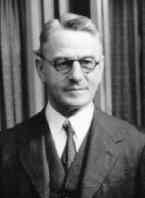
On February 21st, 1961, a meeting was held in Central Hall, Westminster, primarily to seek the Lord's mind as to the desirability of a further revision of the Hymn Book.
- The gathering took place at the request of the trustees of Stow Hill Depot, not only because of their responsibility as publishers,
- but having in mind that such a meeting would also afford opportunity to consider the general work at the Depot.
- It was arranged during a brief visit of Mr.—— to Great Britain, and was attended by a very large number of representative brethren from all parts of the British Isles, and included some specially invited from the Continental countries.
It was realised that only ten years has elapsed since the last revision of the book, and that it was an appreciably shorter time since our brethren on the Continent had had their books,
- but it was evident that there was a growing feeling with many that further adjustments were called for.
- In particular, there was felt to be a shortage of hymns suitable for responding at the Supper, to the light which had come to the saints
- as to the Lord's distinctive place and glory as having come in on God's side, and the appropriateness of worship being rendered to Him at that time.
The conclusion reached at that meeting – notes of which were circulated at the time – was that the Lord was indicating a further revision, and four brothers agreed to accept responsibility for the work.
The examination of all the existing hymns and the many new hymns submitted was started at once, various brethren being asked to help from time to time,
- particularly in assessing the spiritual value of the new compositions.
- In July 1961, the opportunity was taken of the presence again in London of several esteemed brethren from different parts of the world, to seek their counsel on a number of points connected with the revision.
- Much helpful advice was received at that time, and the work continued until it was practically finished by November.
- During that month, those responsible for the revision were able to go through all their tentative conclusions, involving alterations, additions or deletions, in a final series of meetings at which Mr. —— and Mr. P. Lyon were present.
It has been felt that in a certain sense the 1951 revision could be looked upon as one of Mr. James Taylor's [J.T.Sr.'s] final services to the assembly.
- He departed to be with Christ in March, 1953, but had taken a very active part in the work of the revision during the early months of 1951, as he had done in the previous revision, nearly twenty years earlier.
- For this reason the present revisers have been slow to make extensive changes, save such as might be called for by the forward movements of the testimony during the intervening years.
- Furthermore, their knowledge of Mr. Taylor's thoughts on many matters connected with the hymns and their authors – as preserved in notes made in 1951 – has had great weight with those responsible for making changes now.
- It has also frequently helped in considering changes suggested by others.
In the light of the above, the current revision may perhaps be looked upon as an extension of the last one,
- thus affording more scope for the fruit of Mr. Taylor's ministry to appear by the Spirit in the service of song in the assembly.
- This is in accordance with the remarks in the Prefatory Note to the 1962 Revision which appears in the new book.
A few remarks on detail may be added:
- In connection with hymns addressed to the Father, it has been felt that fuller consideration needs to be given to the word "yet to us there is one God, the Father", 1 Cor. 8: 6.
While therefore rejoicing in the knowledge of God, known by the name of Father, Son and Holy Spirit, it must not be assumed that all hymns addressed to God have the Trinity in mind.
It is for this reason that no alteration has been made to several hymns clearly addressed to the Father, but in which expressions such as 'O God' are used, e.g., 143, 157, 314.
On the other hand, a few hymns previously addressed to the Father, but in which were expressions which Scripture connects with God in the Fulness have been changed, e.g., 96, 312.
- The use of the word 'Calvary' in many of the hymns has been questioned, because the word does not appear in Mr. Darby's translation of the Scriptures, and only once in the Authorised Version.
Furthermore, it is a word which lends itself to sentimental usage, and in that setting is frequently connected with popular evangelism.
Such use is completely contrary to the meaning of the word, which is 'skull'.
There appeared to be some basis therefore, for deleting the word, and it would not have been difficult to find alternative scriptural expressions, such as 'the tree'.
However, after full consideration, and taking counsel with several, it has been decided to leave the word in.
If it were deleted from the book, it was realised that those who preach might be put in unnecessary bondage, feeling they must avoid the use of the word when speaking.
The exercise, however, is mentioned here, believing it will be good for all to be reminded that 'Golgotha' –of which 'Calvary' is the Latin equivalent – means 'a skull'.
This would seem to be an important part of the teaching of the cross, and shows how out of keeping with it is anything that plays on the human emotions.
- The light which has come to the saints recently as to worship being rendered to the Lord as soon as He is apprehended as coming in at the Supper, has led to a review of all the hymns containing expressions of worship to Christ.
While it could not be said to be wrong to worship Him at any time, and provision must be made for worship to Him in the wilderness setting, it has been felt that the full import of worship to Him in the service of God will be emphasised if other more appropriate expressions were used in hymns to the Lord intended for use at other times in the service.
It is for this reason that the reference to worship has been deleted from the last verse of No. 4 which is clearly a hymn for use before the Supper. ← 1973: cancelled.
Similarly, when the assembly's link with Christ in the marital setting, which particularly connects with His manhood, is being enjoyed after the Supper, expressions of praise seem more applicable; hence the small change in the last verse of No. 283. ← 1973: hymn deleted.
- In Hymns 74, 84, 201, 235 and 293 the original order of the verses has been restored.
Hymn 277 is now restored to its original form as one hymn of six verses, and hymn 291, reduced by one verse and somewhat altered in wording, is now re-combined in one hymn. ← 1973; 293 appeared first in 1932. It was not restored to the 1932 order. Perhaps the order as written is meant.
In the current revision, it has been felt right to exclude hymns written by those no longer walking in fellowship with us.
- This has resulted in over thirty hymns being deleted from the book, but beyond these, it was felt that the contributions of some earlier authors – even those who had died many years ago – needed to be reviewed.
- The conclusion reached has been that the hymns of those authors known
to have been active in opposing the truth as it was being ministered by the leading servants of their time have been deleted.
- This has led to the loss of a further ten hymns, including several well-loved and often used, and it may be appropriate to refer to certain remarks which bear upon it in Volume 176 of J.T.'s ministry, page 47 [ New Series, 65: 47 ].
The question may arise in the minds of some as to why such hymns should not be regarded as among 'the dedicated things', and if not, why they have remained in use so long.
- In this connection, it is interesting to note that whereas in 1 Chronicles 26: 28 Saul, Joab and others are included in the list of those whose dedicated things were preserved; in 2 Chronicles 5: 1, only the dedicated things of David are brought in and put among the treasures of the house of God.
- "Some of them had to look after the treasures and take care of what men who had afterwards gone wrong had dedicated. They had to look after what David had dedicated, what Samuel had dedicated, what Saul had dedicated, what Joab had dedicated, what Abner had dedicated.
- "Three of those men had fallen out of the ranks, yet what they had dedicated was not to be lost, and that was part of the Levite's work.
- "You cannot ignore what a brother was before he fell; what he dedicated then must be preserved; that is to say, David would have nothing lost; everything is gathered up and preserved under him", 1 Chronicles 26: 26-28", JT 18: 207.
|
It is realised that the new book still contains hymns by those now with the Lord who left us at one or other of the earlier divisions,
- but it has been felt that we should be justified in distinguishing those who led from those who were led, and this explains any apparent inconsistency.
A few more hymns have been deleted not necessarily because of any concern as to them or their authors, but to make way for new hymns and in view of the desire expressed at the meeting at which the revision was decided upon, to reduce the total number in the book.
- Similarly, for the sake of brevity, several long hymns have had one or even two verses deleted. It has been felt that this will make them more generally acceptable and suitable for singing in the assembly.
Careful consideration was given to the exercise to have somewhat fewer hymns in the book, but it has not been found practicable to reduce the total as much as was originally thought,
- nor was it felt that too drastic a reduction would be acceptable to the brethren.
- The outcome is that the new book contains only about twenty hymns less than the previous one.
During the early stages of the revision, it was noted and confirmed by records which various brethren had kept, that
- a good many hymns were very rarely if ever used, and there seemed therefore some justification for dropping them from the book.
- It became clear, however, that a hymn needed to be judged on its individual quality rather than by its frequency of use.
- In this connection, it is felt to be appropriate to quote the following paragraph from the booklet published at the time of the 1932 Revision:
"The importance of saints becoming conversant with the contents of the hymn book may be urged. This will result in individual comfort and edification, and it will assure more variety and freshness in the use of hymns in the assembly. It has been noticed by those who move about among the gatherings that comparatively very few hymns are in current usage. This makes for flatness and staleness in the meetings, whereas if the hymn book were well known, a much more extensive variety would be introduced so as to be sung by the saints as gathered together".
This revision has brought in about fifty new hymns, most of which have been selected from the large number – well over 600 – submitted in view of the revision.
- In one or two cases, a new hymn has been formed by dividing up an existing hymn and adding fresh material by the same author.
- A few others are translations of hymns in current use by our brethren in other countries.
- The one verse by Mr. Stoney, No. 7, will be particularly noted. As far as is known, it is the only hymn of his, and was written before he was twenty.
- He said it was composed at the time when he was the constant companion of JND, about 1833, and adds: "You may see from it how very clearly was brought out the fact that our place is heaven, and that Christ is our Head there".
It might be well to mention that a very large number of suggested changes to existing hymns was received from brethren in all parts of the world.
- This clearly indicated the body of genuine interest and exercise in the book, and the suggestions were valued on that account.
- All were carefully considered, but relatively few have been adopted.
- In many cases, some improvement might have been effected in the mode of expression, but unless the proposed changes bore directly on the truth or were considered essential for some other reason, they have not been made.
- Mr. Wigram's first rule in compiling the 1856 Hymn Book, namely to "retouch as little as possible, and with as light a hand as possible" has been in mind throughout.
- At the same time, it is hoped that his other rules, as given in his account of the revision which is still printed in the beginning of the new book, have also been acted upon.
In this edition, the two first line Indexes – previously separated by one being at the beginning of the book and the other at the end – have been combined into one.
- It is hoped that this will make for easier and quicker finding of any specific hymn.
- The first line of every first verse has been marked with an asterisk, and given in full. The first lines of all subsequent verses have frequently been abbreviated, thus saving space, yet permitting a larger type than has hitherto been used.
Where several verses within the same hymn begin with the same words, e.g., 85, 100, 446, only one entry is given.
While checking the Author Index to ensure accuracy, the dates of many of the earlier authors came to light.
- It is thought that some of this information will be of general interest, as well as helping the brethren to distinguish between two or more authors of the same name.
- The dates of the birth and death of many of the earlier authors have therefore been included in the Author Index.
- Where several hymns have been written by the same author, the dates are only given against the first of these hymns.
- Generally speaking, these dates are limited to those authors who died before, or during, the early years of the present century.
The reason for the increased page width of the new book is mainly to avoid so many long lines having to be 'folded over', thus spoiling the appearance and occupying unnecessary space.
- Compare, for example, Hymn 113 in the old and new books. It has also permitted the use of double column in the first-line Index.
As far as practicable hymns have retained their existing numbers, especially those whose numbers have remained the same through several revisions.
- A few changes have, however, been made to try and avoid, as far as possible, the splitting of verses or the need of turning over the page in the middle of a hymn.
- In several of these cases, and where other changes have been made, it will often be found that a hymn has been restored to a number with which it had been associated prior to 1951.
A. J. Gardiner,
W. Henderson,
G. H. S. Price,
R. Stott.
Page Top
| SUGGESTIONS 1962 |
|---|
The following suggestions in a letter of Oct. 19, 1961
from —— to AJG obviously carried weight. |
|---|
- Omit hymns of authors under discipline – about 29.
- Make two hymns of the following: 52, 156 – alter 'too' – 209, 264, 149, 196, 465.
- Corrections:
131 Alter 'throbbing'
136 Revert to 'Him who dwelling in Thy bosom'
156 Make verse 4, verse 1
383 As noted
399 Alter 'roam'
412 Alter verses 4 and 5
- Omit verses:
8 omit verses 1, 2, 3, retain verse 4
208 omit verse 3
297 omits verses 1, 2, 4, retain verse 3
480 omit verse 2
- Retain all other hymns.
- Replace 29 hymns giving preference to new authors, especially getting something to take the place of 17, 63, 121, 146, 148, 153,164, 263, 403.
- Preface: need for 1961 [1962] revision explained.
Page Top
| REFERENCES |
|---|
References in ministry and letters to hymns, the use of hymns
and the Hymn Book, plus supplementary research material.
|
|---|
J. N. Darby
Letters: 3: 45, 93, 173, 174, 189.
Collected Writings: 13: 370; 16: 156.
F. E. Raven
Ministry: 10: 87, 295; 11: 34, 46.
C. A. Coates
Letters: 147, 198, 200.
J. Taylor, Sr.
Letters: 1: 95, 287, 336, 352
2: 16, 70, 107, 125, 270, 277, 283-4, 408-9, 417.
Ministry: 7. 83; 11. 482; 12: 320; 13: 83; 13: 428; 14: 250;
27: 180; 30: 223, 318; 31: 386; 32: 122; 36: 477;
41: 325, 446; 43: 437; 44.183; 45: 206; 46: 230
46.273; 48: 232; 50: 280; 52: 153; 56: 56; 57: 186
57.2 41; 65: 47; 66: 80; 68: 178; 70.312, 377, 379;
74: 105, 165, 187, 281; 75: 237; 81: 22; 86: 133;
87: 384; 88: 331, 337, 351; 89: 236; 97: 414;
100: 93, 125.
Page Top
| INDEXES AND 1993 SUPPLEMENT |
G. A. Rainbow
- Indexes for the entire 1973/93 series, 1-549:
- Subjects: each hymn under its main subject, by first line and no.,
- Authors: each author with personal dates, each hymn no., total hymns, and earliest edition in which hymns appeared.
- The text of hymns 503-549 in the 1993 Supplement and the usual indexes of first lines of hymns and of authors.
- A Comparative Index of Revisions for every hymn in the series from 1881 through 1973/93.
- Hymns are listed numerically by the hymn number assigned in the latest edition in which they appeared – along with the first line and the author's name as shown in the latest edition.
- Comparative hymn numbers are shown for other editions in which any hymn appeared.
Page Top
Recent sorrowful developments – among brethren identified with the
successive revisions of Hymns and Spiritual Songs for the Little Flock
– are reflected in various compilations.
The 1881, 1903 and even the 1932 revision would now be found deficient in hymns suitable for collective response
- in praise and worship in answer to the many rich and varied glories of Divine Persons, and
- the various relationships of the saints to Them – as opened up in more recent times in the ministry of J.Taylor Sr. and others.
1951: Hymns to the Holy Spirit and to God as 'Father, Son, and Holy Spirit' were included in the 1951 book.
- For some time at least, a few – particularly in North Ireland – who opposed those hymns and withdrew in 1954 reverted to the use of the 1932 book.
- By 1961, some in Manchester, UK, and elsewhere, who withdrew in 1956 for the same reason had produced a new book which excluded such hymns.
- The remnants of those who separated in 1960-61 – most joined some of those who separated in 1970 shortly after – continued to use the 1951 revision.
- 2001: The 1951 edition being out-of-print, 'Hymns and Spiritual Songs for the Flock of God' – including many hymns from other sources – was compiled by two brothers in Auckland, NZ.
1974: A very few – centred in Hamilton, Scotland – who separated before the 1970 division use 'A Few Hymns and Spiritual Songs for the Last Days', compiled by 2 brothers.
1962: The legal sect produced the 1962 revision, using it until after the 1970 division. A subsequent revision – date unknown – was then made to remove hymns written by brethren who had separated from them.
The main group of those who separated in 1970 continues to use the 1962 book and, as far as is known, its subsequent divisions also use that edition.
- 1991: Some in the USA who later separated also use a 1991 Supplement.
1973: The balance of those who separated in 1970 – and who are identified with Kingston Bible Trust – issued the 1973 re-selection, incorporating some additions in 1984.
- As far as is known, the subsequent divisions among that group all use a version of the 1973 book.
1993: A very few, with whom the editor of 'My Brethren' is happily associated, who have a judgment of the legal sect but are not connected with any of the 1970 groups – and disown 'brethrenism' in all of it various forms – use the 1973 edition along with a 1993 Supplement.
Page Top
The following is incomplete and possibly outdated.
- It is included for those who have little or no acquaintance with the divergences from the truth.
- An examination of the hymn books mentioned below will substantiate the fairness of the comment in the preface that:
"The distinction between a believers' meeting and the assembly is evident in the hymns and their subjects. Hymns used in believers' meetings are mostly older compositions preoccupied with individual blessings, and rarely manifesting a spirit of worship. Such hymns reveal a lack of insight as to the bearing of the Lord's Supper on the public position or on the service – worship – of God in the assembly".
• Exclusive Meetings
Exclusives who reject certain teachings of FER and JT as false, remain in ignorance as to the service of God and have become paralyzed in the past as to the hymns they use.
The last remaining section of the 1890 Lowe party – the largely North American based Tunbridge Wells group, which claims sole possession of the Lords' table, but in 1992 divided into 'Perth' and 'Nepean' – still uses the 1881 Little Flock Hymn Book.
- It is held in such reverence that, at one time at least, it was bound at the back of JND's New Translation.
William Kelly's followers in the Ramsgate difficulty – 1879–1881 – produced 'Hymns Selected and Revised in 1894'.
- After the 1926 reunion of the Kelly party with some of the Lowe-Continental party – who used the 1881 book – 'Hymns Selected and Revised in 1928' was issued.
- It continued in use after the 1953 reunion with the 1928 Grant-Mory group which, in the early 1930's re-established links – existing from c. 1885 but broken in 1922 over the Grants' relations with Glanton – with the New Zealand Stuart meetings.
The main Glanton group in England continued using the 1903 revision while the 1932 Grant-Booth group with whom they had inter-communion still used the 1881 book.
- After they both joined the reunion in the 1970's a third version of 'Hymns Selected and Revised' was issued – with hymns from those books – but with no advance in spiritual intelligence as to the service of God.
• Open Meetings
Open meetings – originally so-called from receiving those associated with teachers of false doctrine* – use several books.
- Chapels use 'Hymns of Worship and Remembrance'.
- Meetings which were originally Grant-Exclusive may still use the 1881 Little Flock Hymn Book.
- Gospel Halls use 'The Believer's Hymn Book'.
- The Needed Truth group – meetings which separated c.1893 claiming to be 'The Churches of God in the Fellowship of the Son of God, the Lord Jesus Christ' – uses its own 'Psalms Hymns, and Spiritual Songs'.
All the above opens and exclusives divorce the gospel from the assenbly, using different hymn books for the gospel.
G.A.R.
Page Top
| KEY TO INITIALS |
|---|
Names – and other details believed to be accurate – of brethren referred
to in Parts One and Two are linked to an available BIOGRAPHY. |
|---|
AEM
Albert Ernest Myles, 1880-1971, S
AHB Archibald H. Broadbridge, * K
AJEW A. John E. Welch, London, * after 1972, SK
AJG
Alfred J. Gardiner, London, 1884-1971, S
FBF Frank B. Frost, Croydon, living at 2003, K
FER Frederick Edward Raven, Greenwich, 1837-1903
GHSP George Henry Stuart Price, Harrow, 1911-63, S
GVW George Vicesimus Wigram, 1805-79
JBS James Butler Stoney, 1814-97
JM John Mason, Belfast, d. 2006, age 92, K
JND John Nelson Darby, 1800-82
PL Percy Lyon, London, 1882-1966
MWB Malcolm W. Biggs, Enfield, 1875-1941
RS Robert Stott, Brighton, 1902-76, SK
JT James Taylor, Sr., New York, 1870-1953
THR
Thomas H. Reynolds, Burford, Oxon., 1830-1930
WH Wm. Henderson, Glasgow, d.1963 S
* = Deceased at time of this posting – date uncertain.
S = Sometime trustee of 'Stow Hill Bible and Tract Depot'.
K = Sometime trustee of 'Kingston Bible Trust'.
|
Page Top